
Skin Checks After Summer: What to Look Out For
Australian summers mean more time outdoors, more sun, and often a lot more exposed skin. By the time autumn arrives, many people start noticing small changes, a new freckle, a rough patch, or a mole that looks a little different from before.
Most of these changes are harmless. But some are worth paying attention to.
This article explains what to look for when checking your skin after summer, and when it may be worth seeing a GP.
If you have noticed any new or changing spots after summer, Valentine Healthcare offers GP skin checks to help you understand what is normal and what may need closer attention.
Why Skin Checks Matter After Summer
Summer is typically when Australians get the most sun exposure. Long days outdoors, time at the beach, and outdoor work all add up over the season.
After summer ends, skin changes can be easier to notice. The warmth has passed, and you have time to pay attention to anything new or different. A post-summer check, whether at home or with a GP, is a practical habit to build.
Common Skin Changes People Notice After Summer
Some skin changes after summer are normal. Others are worth monitoring. Here are some common things people notice:
- a new spot that was not there before
- a mole that looks darker, larger, or uneven
- a rough or scaly patch that does not seem to settle
- a spot that looks different from others nearby
- an area that feels itchy, tender, or irritated without a clear reason
- a sore that has not healed properly over several weeks
What to Look For When Checking Your Skin
Look for New or Changing Spots
A new spot on your skin is worth noting, especially if it appears after a period of high sun exposure. Similarly, an existing mole or freckle that changes over time should not be ignored. Changes in size, shape, or colour are the things to watch for.
Use the ABCDE Guide
The ABCDE guide is a helpful way to assess whether a spot may need further review:
- A – Asymmetry: one half of the spot does not match the other
- B – Border: edges look uneven, notched, or irregular
- C – Colour: more than one shade, or an unusual mix of colours
- D – Diameter: the spot appears to be getting larger
- E – Evolving: the spot is changing over time in any way
If a spot meets one or more of these criteria, it may be worth having it assessed by a GP.
If a spot looks different, changes over time, or simply does not feel right, a GP can assess it early and guide you on what to do next.
Also Notice the Spots That Stand Out
Beyond the ABCDE guide, pay attention to any spot that simply looks different from the others on your skin. Spots that bleed, itch, crust, or fail to heal over time are also worth mentioning to a GP during a check.
When It Is Worth Booking a GP Skin Check
Consider booking a GP skin check if any of the following apply:
- A new spot has appeared after the summer
- a mole has changed in size, shape, or colour
- a patch on your skin stays rough, scaly, or irritated
- a spot bleeds, crusts, or has not healed after several weeks
- You are simply unsure whether a change is normal
If you are unsure about a skin change, booking a skin check can provide clarity and help you make informed decisions about your health.
Who Should Be Extra Careful
Some people may benefit from more regular skin checks. This includes:
- adults who spend significant time outdoors, for work, sport, or leisure
- people with fair skin or a large number of moles or freckles
- older adults with many years of sun exposure behind them
- Anyone with a personal or family history of skin cancer
If you fall into one of these groups, it is worth speaking with a GP about how often skin checks may be appropriate for you.
What Happens During a Skin Check With a GP
A GP skin check is straightforward. The doctor will ask about any spots or changes you have noticed, then examine the area closely. They may compare the spot with the surrounding skin to get a clearer picture.
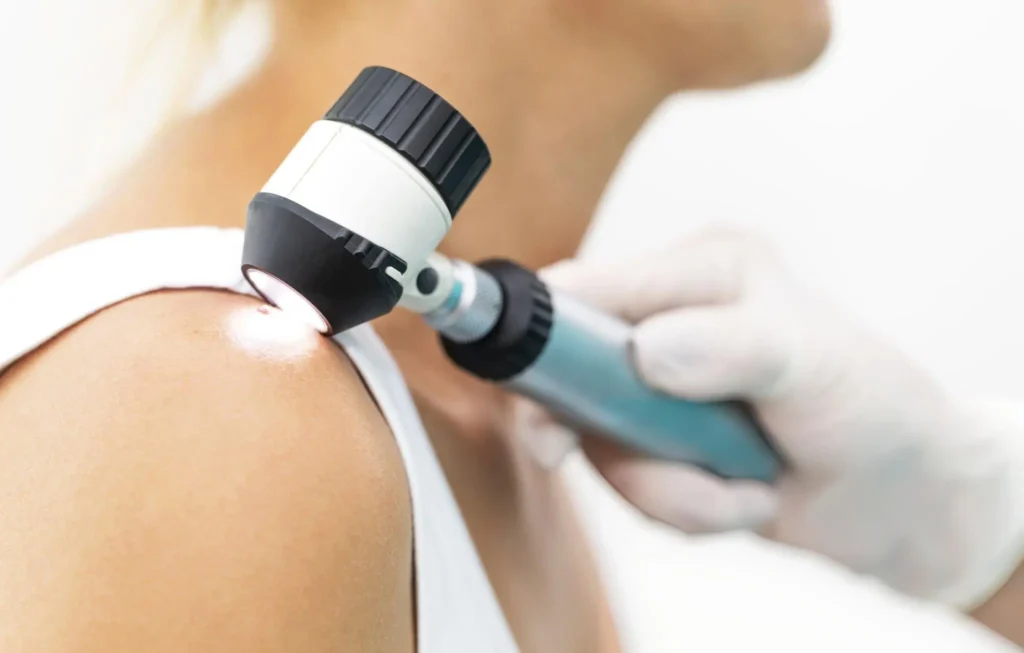
If needed, a GP may use a dermatoscope, a small handheld tool that allows a closer look at a spot. If further investigation is required, your GP will explain the next steps clearly.
At Valentine Healthcare, GP skin checks are simple and focused on understanding any changes in your skin and advising on appropriate next steps.
A Simple Habit to Carry Beyond Summer
Getting familiar with your own skin is one of the most useful things you can do. Check it regularly, ideally every few months, so that anything new or changing is easier to notice.
Sun protection also matters beyond summer. Using sunscreen, wearing protective clothing, and seeking shade on high UV days all support your skin health throughout the year.
Do not ignore new or changing spots. When something does not look right, it is always reasonable to have it checked.
Conclusion
Summer is often when sun exposure adds up the most. After the season ends, autumn is a sensible time to pay attention to any skin changes you may have noticed.
Many spots are harmless. But some changes are worth checking early, and a GP can assess anything new, changing, or concerning and advise you on what to do next.
Whether you have noticed a new spot, a change in an existing mole, or simply want peace of mind after summer, Valentine Healthcare provides GP care, skin checks, and ongoing support for patients in the Valentine area. Book online or contact the clinic to arrange an appointment.
FAQ’s:
What skin changes should I look for after summer?
Look for new spots that were not there before, moles that have changed in size, shape, or colour, rough or scaly patches that do not settle, and any spot that bleeds, itches, or does not heal. These are the most common changes worth monitoring after a summer of sun exposure.
When should I get a spot checked by a GP?
It is worth seeing a GP if a spot is new, if an existing mole has changed, if a patch on your skin stays rough or irritated, or if you are simply not sure whether a change is normal. Early assessment can provide clarity and help guide appropriate next steps.
What does the ABCDE guide mean for skin checks?
The ABCDE guide helps identify spots that may need review. It stands for Asymmetry, Border, Colour, Diameter, and Evolving. If a spot has an uneven shape, irregular edges, mixed colours, is growing, or is changing over time, it may be worth having a GP take a closer look.
Can a GP check suspicious moles or skin spots?
Yes. GPs can assess moles and skin spots during a skin check. They may use a dermatoscope for a closer examination and, if needed, explain any further steps required. A GP skin check is a straightforward and practical way to get clarity on any changes you have noticed.