
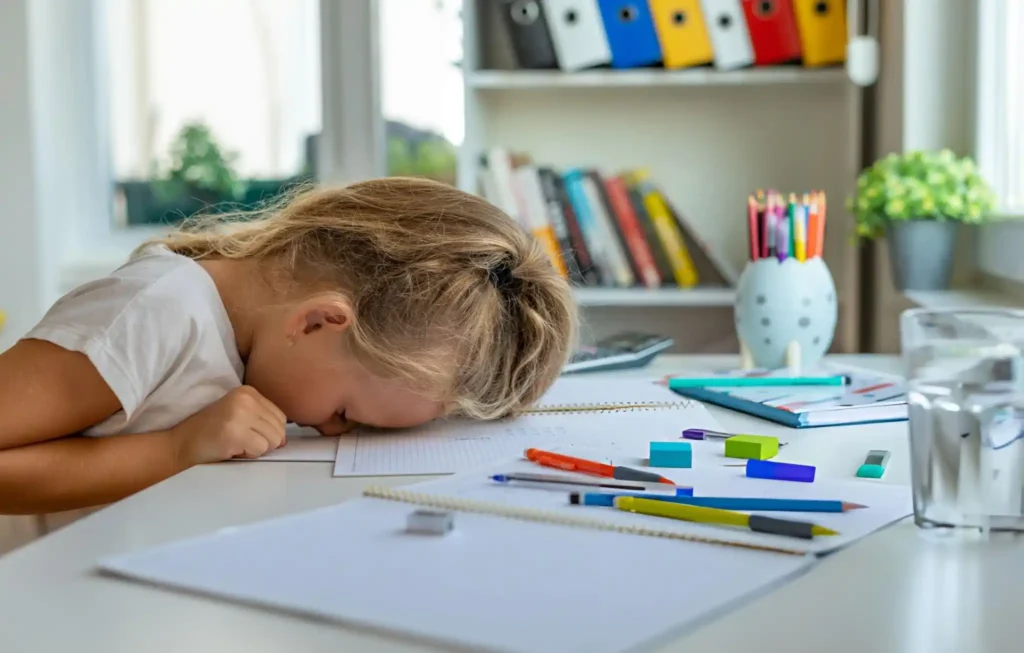
When a young child struggles to sit still, focus, or manage big emotions, many parents start to wonder about ADHD. These concerns are understandable and deserve proper attention.
The word “mimic” matters here. It means some behaviours can look similar to ADHD, not that they are the same thing. Family stress can sometimes lead to behaviours that resemble ADHD signs in young children, but ADHD is a separate neurodevelopmental condition. Understanding where behaviours may come from is a helpful first step.
This article explains the overlap and when a GP review may help.
Key Takeaways
- Family stress can sometimes create behaviours that look similar to ADHD in young children, including poor focus, restlessness, emotional outbursts, and sleep changes.
- ADHD is a real neurodevelopmental condition and should not be dismissed.
- Stress does not cause ADHD, but it can make some behaviours more noticeable.
- A GP can help assess the bigger picture and guide next steps where appropriate.
Can Family Stress Really Look Like ADHD in Young Children?
Yes. Stress can sometimes affect a child’s focus, sleep, emotions, and behaviour in ways that can resemble ADHD traits. The Royal Australian College of General Practitioners has noted that emotional trauma can be associated with difficulty concentrating and acting out, which means the picture is not always straightforward.
This does not mean every child showing these signs has ADHD. It also does not mean stress causes ADHD. It simply means similar behaviours can have different causes. Looking at the full picture is important before concluding.
What ADHD Can Look Like in Young Children
ADHD is a real condition that begins in early childhood and can affect attention, activity levels, and impulse control. The Royal Children’s Hospital Melbourne explains that ADHD affects how the brain regulates attention, behaviour, and emotions, but adds that not all children with these symptoms have ADHD.
Common signs that parents may notice include:
- trouble focusing or finishing simple tasks
- constant movement or fidgeting
- impulsive actions or quick reactions
- difficulty waiting their turn
- emotional outbursts or low frustration tolerance
- trouble following instructions
- struggles with sleep and daily routine
These signs are worth paying attention to. But seeing some of them does not confirm anything on its own.
How Stress and Instability Can Affect Behaviour
Young children often express stress through their behaviour rather than their words. They may not be able to say “I feel worried,” so it shows up in how they act.
Family changes that can affect a child’s behaviour include:
- parental separation or conflict at home
- moving house or starting at a new childcare or school
- financial pressure affecting the household
- a parent who is unwell or going through significant stress
- changes in caregivers or daily routine
- grief or loss in the family
This is not about blame. Children respond to stress in different ways, and family stress is a part of life that many households experience at some point. What matters is noticing the effect on your child and responding with support.
Why Sleep and Routine Matter So Much
Sleep and daily routine play a much bigger role in young children’s behaviour than many parents realise. Poor sleep can worsen attention, mood, and emotional control, even in children without any underlying condition.
Unstable routines can also make transitions harder, leading to behaviour that looks like inattention or impulsivity. Pregnancy, Birth and Baby recommends consistent sleep, predictable routines, outdoor activity, and clear instructions to support children dealing with ADHD-related challenges. The same approach helps any young child who is struggling to settle.
If sleep has been disrupted or routines have changed recently, that context matters when looking at behaviour.
ADHD, Stress, or Both? Why the Full Picture Matters
This is one of the most important points for parents to understand.
A child can have ADHD and also be affected by stress at the same time. Stress can make existing ADHD traits more noticeable. ADHD can also add pressure to family life, which then loops back into more stress. These factors can overlap, and one does not rule out the other.
The Royal Children’s Hospital notes that diagnosis involves gathering information from multiple sources, rather than relying on a single observation or appointment. ADHD can also overlap with anxiety, sleep problems, hearing or vision issues, and learning difficulties. The goal is not to find blame, but to understand patterns.
What Parents Can Track Before Seeing a GP
Keeping simple notes before a GP appointment helps build a clearer picture. You do not need to record everything. A few honest observations are usually enough.
Worth keeping an eye on:
- When the behaviour started
- whether it changed after a family event or transition
- sleep patterns and quality
- screen time habits
- Feedback from childcare or school
- emotional triggers and what happens around outbursts
- Behaviour at home compared with other settings
- eating, illness, and any recent changes in routine
- What seems to help your child calm down
These notes are not about catching problems. They help you describe what you are seeing more clearly during your appointment.
When It Is Worth Speaking With a GP
As a general guide, speak with a GP when behaviour concerns continue rather than settle. Healthdirect Australia recommends seeing a doctor if symptoms are making daily life difficult, since other conditions can produce similar signs.
Consider booking a GP appointment if:
- Behaviour has been a concern for several weeks or more
- It is affecting childcare, school, friendships, or family life
- Sleep is regularly disrupted
- Emotional outbursts are frequent or hard to manage
- You are unsure whether ADHD, stress, anxiety, or development may be involved
- Behaviour has changed suddenly or seems to be getting worse
If your child’s behaviour has changed or you are unsure whether ADHD, stress, sleep, or development may be involved, a GP appointment at Valentine Healthcare can help you discuss the wider picture. You can learn more about our children’s health services before booking.
What a GP May Do During the Appointment
A GP appointment for behaviour concerns usually begins with an assessment of your child’s behaviour patterns and overall health history. Your GP will usually:
- Ask about your child’s behaviour, sleep, routines, and recent family changes
- review general health and development through a health assessment where appropriate
- consider whether hearing, vision, or sleep concerns may be involved
- Ask about observations from childcare or school
- discuss whether a referral to a paediatrician, psychologist, or child psychiatrist may be helpful
A GP generally cannot confirm an ADHD diagnosis in a single visit. This is normal. The role of the GP is to understand the wider picture and discuss whether further assessment or referral may be appropriate. If you would like to understand consultation fees before booking, our fee page explains how billing works at the clinic.
What Parents Can Do While Waiting for Support
While you wait for your appointment, some simple steps can help:
- Keep daily routines predictable and consistent
- Use short, calm instructions rather than long explanations
- Support good sleep with a regular bedtime routine
- Praise positive behaviour when you notice it
- Reduce avoidable stress around your child where possible
- Speak with childcare or school about what they are seeing
- Avoid punishment-heavy responses when your child is overwhelmed
These steps are not a substitute for professional assessment, but they may help provide support while you organise further advice.
Conclusion
Family stress can sometimes resemble ADHD-like behaviour in young children, but ADHD remains a real neurodevelopmental condition that should not be dismissed. The reality is that several factors often overlap, and understanding the full picture takes time and proper assessment.
Parents do not need to work through these concerns alone.
Valentine Healthcare provides GP care for children and families in Valentine, NSW, with support to assess behaviour concerns and discuss suitable next steps. You can contact the clinic to book an appointment.
FAQs
Can family stress look like ADHD in young children?
Yes. Stress can affect attention, sleep, emotional regulation, and behaviour in ways that may resemble ADHD. The RACGP has noted that emotional difficulties can be linked with concentration problems and acting out. A proper assessment is needed to understand what is actually happening for your child.
How do I know if my child’s behaviour is ADHD or stress?
You usually cannot tell from one situation alone. Diagnosis involves gathering information across different settings and over time. A GP can help review the full picture, including family context, sleep, development, and observations from school or childcare.
Can stress cause ADHD?
No. ADHD is a neurodevelopmental condition and is not caused by family stress. However, stress may affect how a child behaves, sleeps, and copes with daily life, and it can sometimes make existing ADHD traits more noticeable.
When should I speak to a GP about ADHD-like behaviour?
Speak with a GP if behaviour concerns continue over several weeks, affect school or friendships, disrupt sleep, cause distress, or feel hard to manage at home. A GP can listen, assess the wider picture, and guide you toward appropriate next steps.